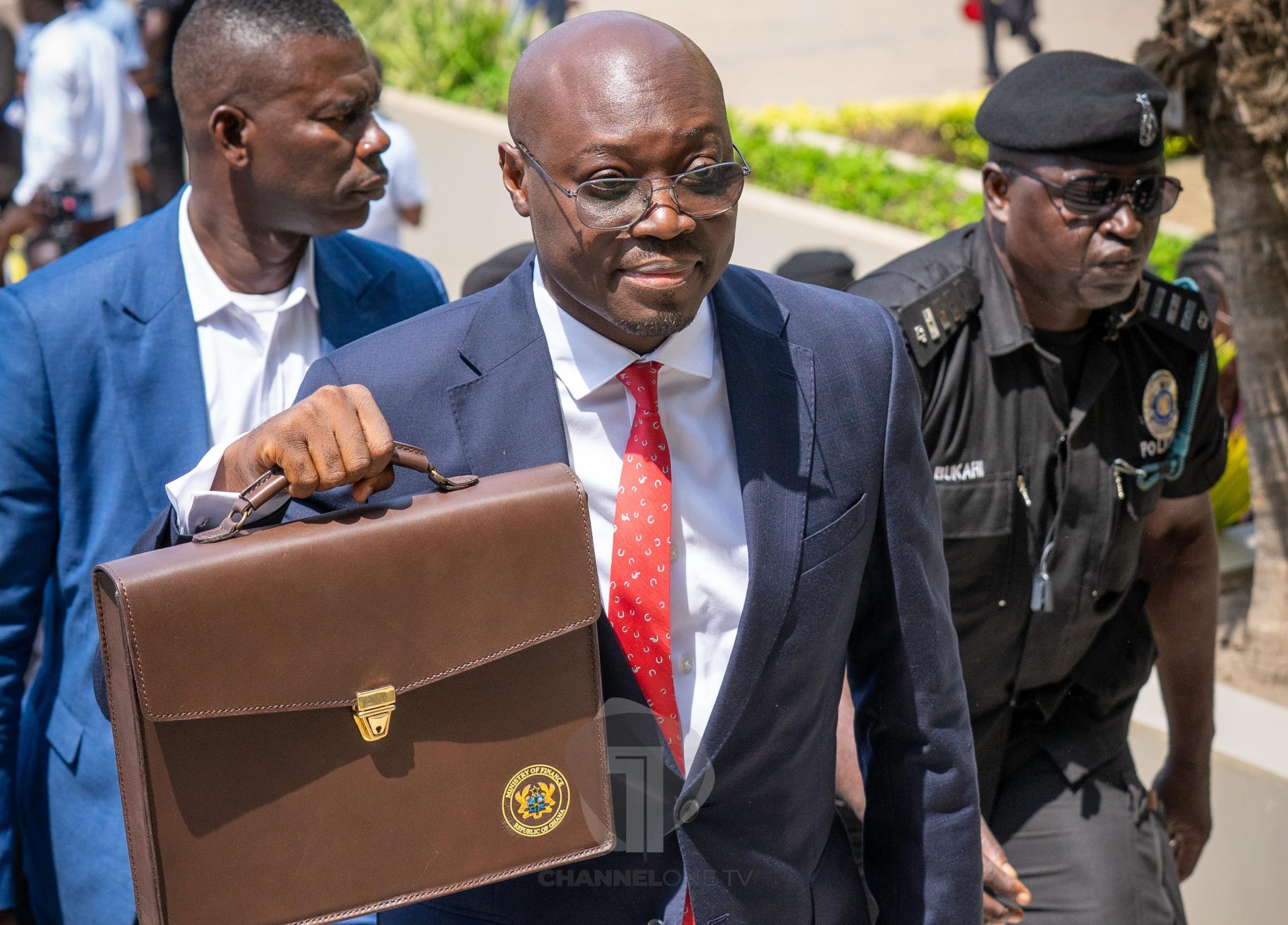
Cost of capital for Ghanaian businesses falling, Finance Minister Dr Cassiel Ato Forson has said, as government points to declining Treasury bill rates and improving economic stability as signs that financing conditions are beginning to ease.
Dr Forson made the statement during a meeting with International Finance Corporation Managing Director Makhtar Diop. He said government’s deliberate actions to bring down interest rates are starting to reflect in the wider financial system, creating a more supportive environment for businesses that need credit to expand.
According to the Finance Minister, the fall in Treasury bill rates is one of the clearest signs that the cost of capital is reducing. Treasury bill rates are important because they often serve as a benchmark for pricing other forms of credit in the economy. When government borrows at very high rates, banks and investors may prefer to lend to government rather than to private businesses. That can make business loans expensive and difficult to access.
Dr Forson said government has worked intentionally to reduce this pressure. He noted that lower rates should help create space for private sector borrowing, investment and job creation.
Government links lower rates to economic stability
The Finance Minister said Ghana has moved from a difficult economic period into a more stable environment. He cited improving confidence, stronger macroeconomic management and better credit rating signals as important parts of the recovery process.
In his view, stability should now be used to transform the economy, not merely to keep the numbers looking better. That means using lower borrowing costs to support production, local enterprise and private investment.
Dr Forson said Ghana wants to move towards an investment-grade credit rating by 2030. Achieving that would allow the country to borrow on better terms, both locally and internationally. It could also reduce the amount government spends on debt servicing, which has been one of the major pressures on public finances.
He explained that borrowing more cheaply matters more than simply borrowing less in headline terms. Using his example, raising US$2 billion at 5 per cent would be better than raising US$1 billion at 10 per cent because the interest cost would be lower and repayment pressure would be more manageable.
Why Treasury bill rates matter to businesses
For Ghanaian businesses, the cost of capital affects almost every major decision. A company that wants to buy equipment, open a new branch, hire staff, import raw materials or expand production often needs financing. When interest rates are high, even profitable ideas can become difficult to pursue.
High borrowing costs also affect small and medium-sized enterprises more severely because many of them lack collateral, long financial records or access to cheaper foreign financing. As a result, a fall in Treasury bill rates can be important if it encourages banks to lend more to the productive sectors of the economy.
Recent public data and official budget statements show that Treasury bill rates have declined sharply compared to previous levels. Government has presented this as part of a broader strategy to lower domestic financing costs and restore confidence in Ghana’s economy.
However, lower Treasury bill rates do not always translate immediately into cheaper business loans. Banks also consider credit risk, operating costs, inflation expectations and borrower history before reducing lending rates. This means businesses may still face tight conditions even when government securities become less attractive.
IFC support and private sector growth
Dr Forson called on the IFC to deepen its support for Ghanaian businesses in sectors that can drive transformation and create jobs. The IFC, which is part of the World Bank Group, focuses on private sector development in emerging markets. Its support can come through direct investments, advisory services, project financing and partnerships with local financial institutions.
The Finance Minister’s appeal reflects a broader policy direction. Government wants private capital to play a larger role in infrastructure, industrial development and job creation. This is especially important at a time when public finances remain constrained and government cannot fund every major development need directly.
Makhtar Diop congratulated Ghana on recent economic progress, especially the reduction in inflation. He also indicated that the IFC is willing to support the growth of Ghana’s middle class, local investors and broader private sector participation in infrastructure financing.
The credit rating target
Ghana’s ambition to reach investment-grade status by 2030 is significant. Investment-grade ratings are usually given to countries judged to have lower default risk and stronger ability to meet debt obligations. If Ghana reaches that level, it could access cheaper financing and attract a wider pool of long-term investors.
This will not happen automatically. It will require sustained fiscal discipline, credible debt management, stable inflation, stronger revenue mobilisation and continued confidence from both local and international investors.
Credit rating agencies have already noted improvements in Ghana’s outlook, but the country still faces constraints linked to debt levels, exchange rate risk and exposure to commodity price shocks. That is why Dr Forson’s message focused not only on present stability, but also on using that stability carefully.
What businesses will be watching
Businesses will be watching to see whether lower Treasury bill rates lead to actual reductions in bank lending rates. They will also look for improvements in access to credit, especially for sectors such as agriculture, manufacturing, logistics, construction, technology and services.
For the recovery to be felt fully, cheaper capital must reach the businesses that create jobs and produce goods. If banks remain too cautious or if lending rates stay high, the impact of falling Treasury bill rates may be limited.
The key test is whether government’s economic gains can move from policy statements into real business expansion. Lower rates are a good starting point, but businesses also need reliable power, predictable taxes, faster public payments, stable exchange rates and supportive regulation.
A cautious but positive outlook
Dr Forson’s comments suggest government believes Ghana is entering a phase where stability can be converted into growth. The fall in Treasury bill rates, improved investor sentiment and efforts to strengthen Ghana’s credit profile are being presented as signs that the cost of capital is gradually easing.
For Ghanaian businesses, this could bring relief if the trend continues and banks respond with more affordable lending. For government, the challenge is to keep the gains intact while ensuring that cheaper financing supports real production, job creation and long-term economic transformation.
About the Author