
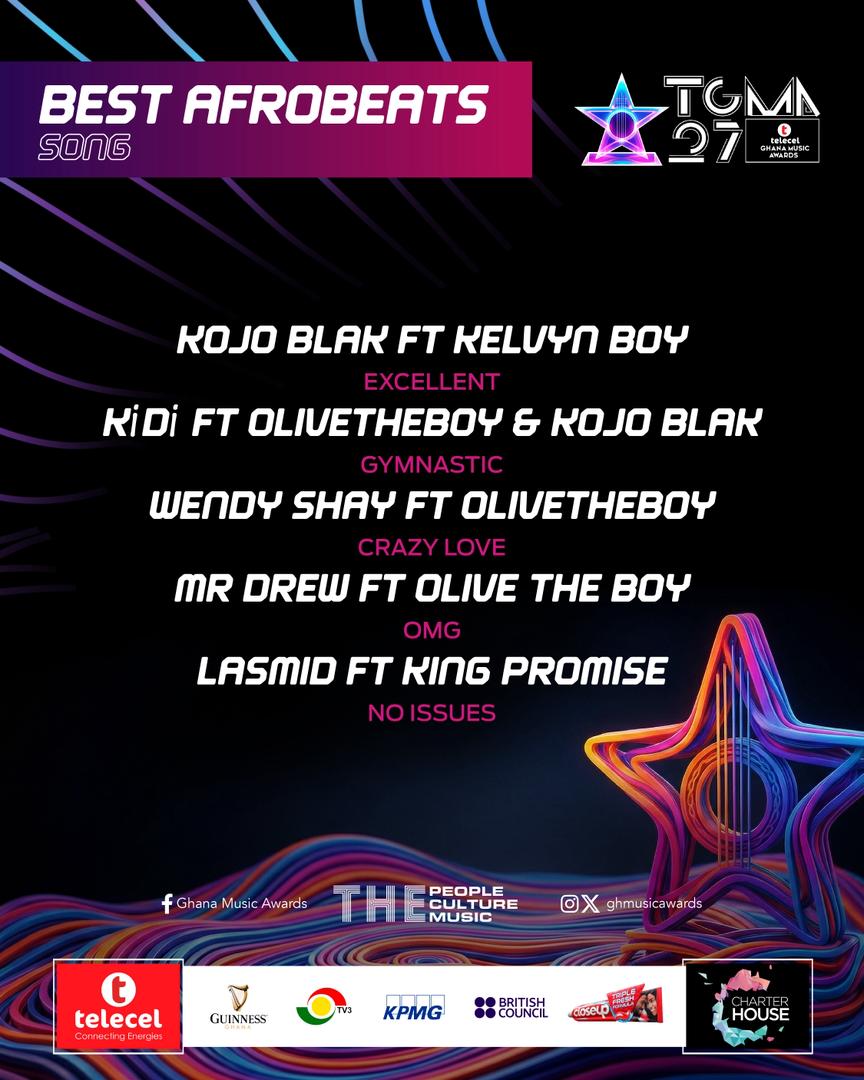
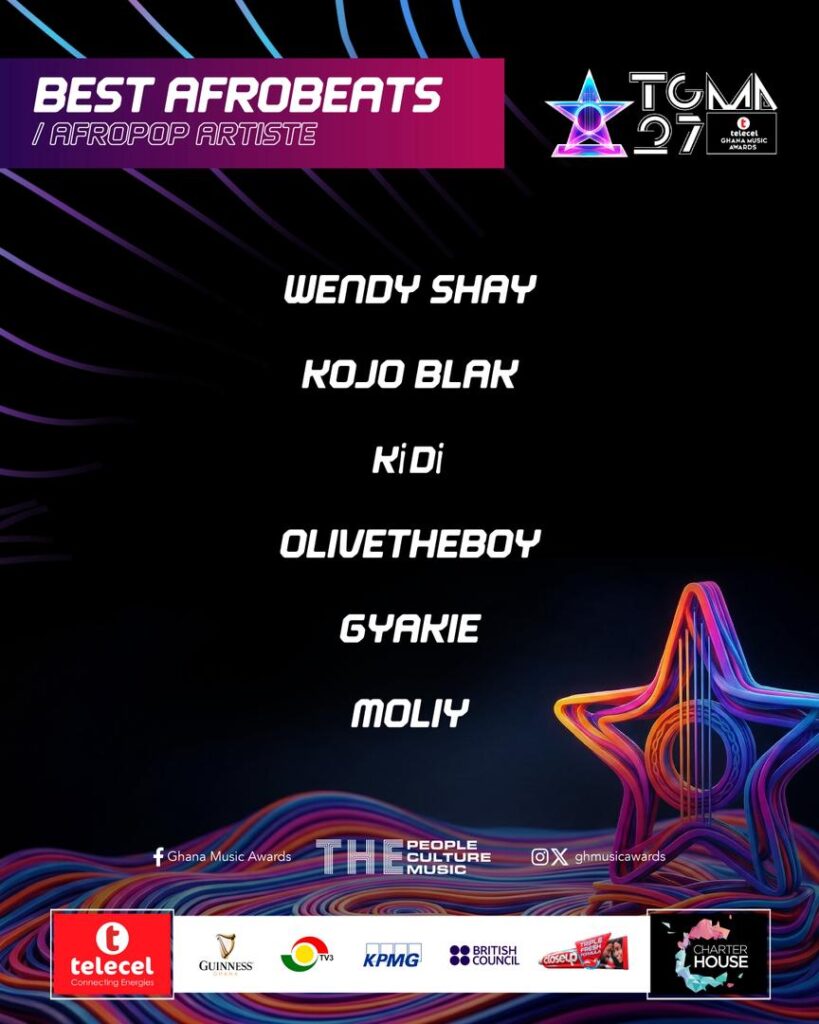
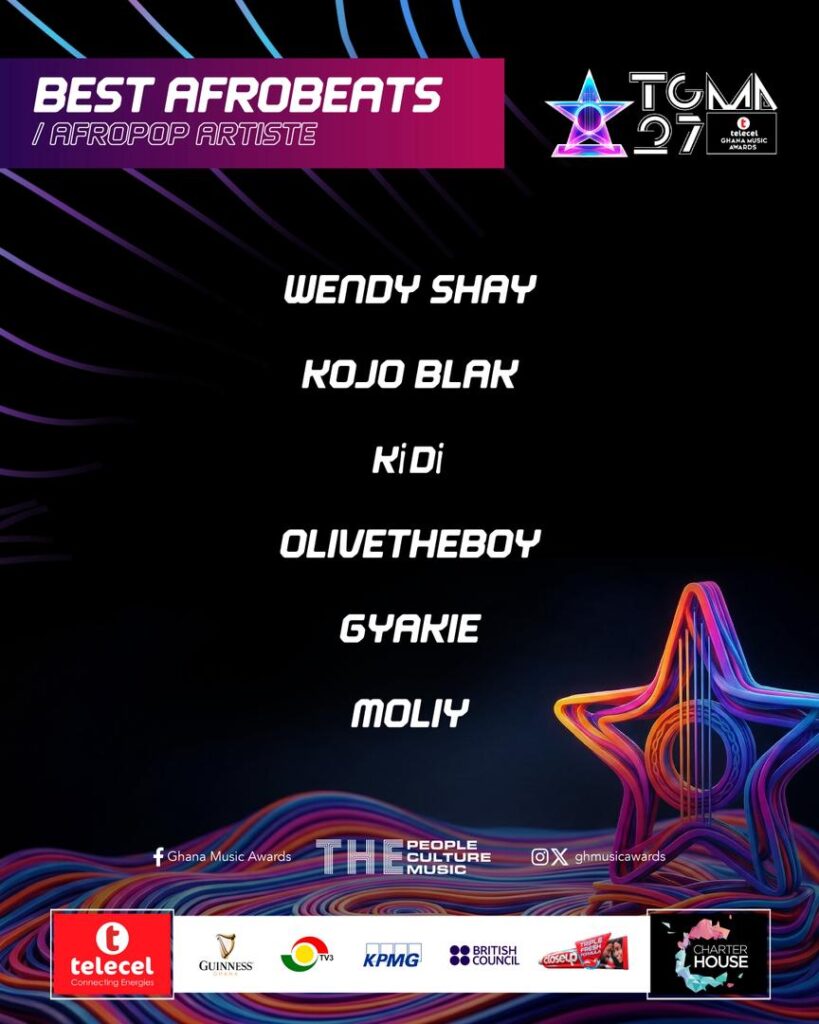
27th TGMA Best Afrobeats/Afropop Artiste nominees have been confirmed, and the line-up makes this one of the most talked-about categories ahead of the main awards night. Wendy Shay, Kojo Blak, KiDi, OliveTheBoy, Gyakie and Moliy are all in contention for the Best Afrobeats/Afropop Artiste trophy as the 27th Telecel Ghana Music Awards season heats up.
This category has become a real battleground because it sits right at the centre of what many listeners play daily. Afrobeats and Afropop dominate radio rotation, TikTok trends, club sets, weddings, and streaming playlists, so the artistes who shine here usually have the strongest connection with the general public. The award is not only about having a good year musically. It is also about momentum, audience pull, and the ability to keep people listening over time.
What the category is really judging
The Best Afrobeats/Afropop Artiste award is based on popularity and audience appeal within the Afrobeats and Afropop space. It also requires the artiste to have commercially released an Afrobeats or Afropop hit single, EP or album within the year under review. In simple terms, it is about impact and visibility, plus music that has travelled.
In recent years, this category has shifted from being a side conversation to becoming one of the top moments fans look out for. The reason is clear. Afrobeats and Afropop now carry Ghanaian music far beyond the country’s borders, and the artistes in this lane often have the widest reach, both locally and internationally.
A quick look at the TGMA calendar
The 27th edition is expected to climax on Saturday, 9 May 2026. The nominee announcement took place on Saturday, 14 March 2026, and that is where the competition lines were drawn. Between now and the main event, every public appearance, performance, viral moment, and new release can shape perception, even if the work was already submitted within the eligibility period.
The six contenders and what makes each one dangerous
Wendy Shay returns to the TGMA conversation with the kind of consistency that keeps an artiste in demand. Her strength has always been energy and presence, whether on stage, in videos, or on collaborations. She has built a reputation for making songs that stick, and she remains one of the most visible female voices in Ghana’s Afropop space. If the category becomes a public popularity contest in the streets and online, she is naturally in the mix.
Kojo Blak is one of the fresh names in the race, and that is part of the story. A nomination like this often signals that the industry has noticed sustained growth, not just one lucky moment. For many fans, Kojo Blak has felt like a steady rise, with more attention coming through features, club-friendly records and increased visibility across platforms. Being nominated alongside established names is a statement, and it can also energise supporters who want to see a new face take the prize.
KiDi is a familiar figure in this space, with a track record that already speaks for him. He has shown over multiple years that he can blend smooth melodies with pop leanings while still staying rooted in Ghana’s sound. That crossover ability matters in a category like this because it often reflects the artiste’s range, not only within Ghana but across Africa and among diaspora audiences. Even when he is not the loudest voice in the room, his music tends to travel well.
OliveTheBoy brings a different kind of weight, especially after his rise in the last TGMA cycle. His sound sits comfortably between emotion and groove, and he has built a fanbase that connects strongly to melody-driven Afrobeats and Afropop. Being in this category suggests he has moved from “one to watch” to a serious contender. It also helps when an artiste’s songs are easy for DJs and casual listeners to pick up, which has been a big part of his appeal.
Gyakie remains one of Ghana’s strongest songwriters in the Afropop space. Her style leans into feeling and storytelling, and her fanbase has often come through people who want music that is not only for the dancefloor. That matters because Afropop is broad, and the category is not limited to fast tempo records only. Gyakie’s advantage is clarity of brand, and the fact that her music is easy to connect to, whether you are in Accra or outside Ghana.
Moliy represents a modern, outward-facing version of Ghanaian pop, with a sound that can fit into multiple markets. Her strength is versatility, and the way she can move between Ghana’s scene and wider Afrobeats circles without sounding forced. In award conversations, international visibility does not automatically guarantee a win, but it can add to the sense of a “big year”, especially when the artiste’s collaborations and reach are clearly expanding.
Why this year’s race feels unpredictable
This is one of those categories where the winner can change depending on what fans value most. Some people will judge by hit power, others by performance presence, others by overall visibility, and some by how the music has represented Ghana outside the country. With a line-up that blends established star power and rising momentum, there is no easy pick.
Also, the TGMA voting system involves multiple layers. It is not purely public voting, and it is not purely a closed room decision. That structure usually means an artiste needs both strong audience pull and a solid case on output and impact.
What fans should watch between now and the awards night
From now till the main ceremony, keep an eye on three things.
- Live performances and major appearances, because they shape perception quickly
- Streaming and radio momentum, because it reflects real listening habits
- Public conversations, because the loudest buzz often influences how a category is talked about
One thing is certain. The Best Afrobeats/Afropop Artiste category is no longer a quiet corner of the TGMA list. It is one of the biggest conversations in Ghanaian music right now, and the 2026 nominees show just how competitive the scene has become.
About the Author