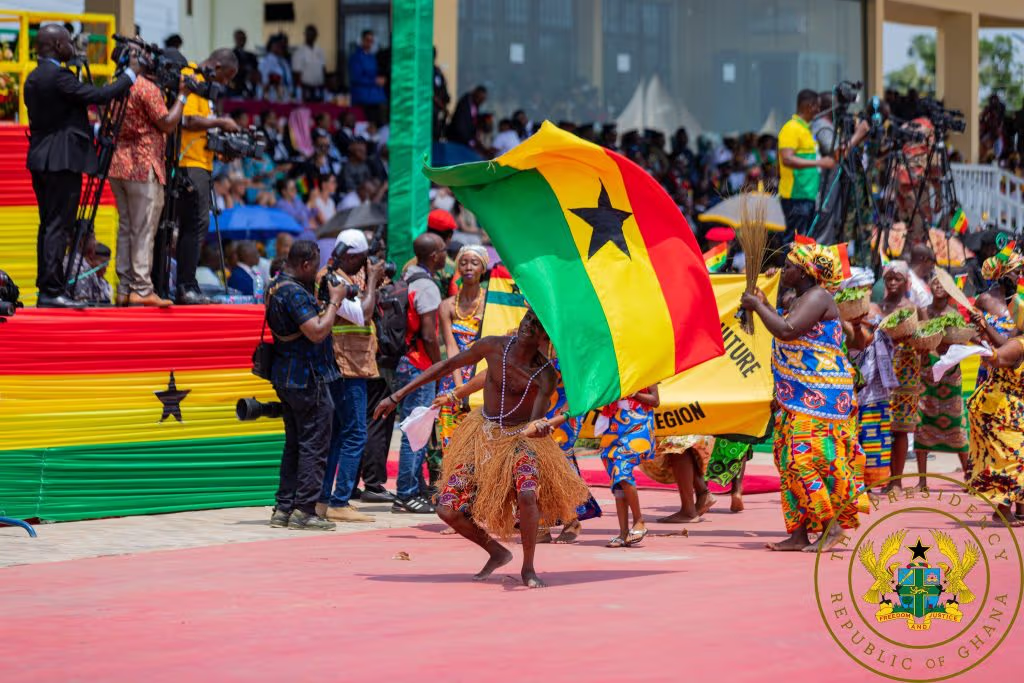
President Mahama Ghana 69th Independence Day speech set the tone for Ghana’s 6 March 2026 celebrations, with the President urging citizens to hold onto national unity while focusing on jobs, discipline, and a more confident economy. Speaking at Jubilee House under the theme “Building Prosperity, Inspiring Hope”, President John Dramani Mahama paid tribute to Ghana’s founding leaders, highlighted what he described as improving economic conditions, and outlined fresh policy priorities aimed at lifting productivity and widening opportunity.
The ceremony itself was deliberately modest, but the message was broad. The President framed independence as more than a yearly parade, describing it as a living responsibility that requires better governance, stronger institutions and citizens who take ownership of the country’s direction. He praised Ghana’s democratic stability, noting peaceful transfers of power and political competition without national breakdown, then challenged the nation to match that political maturity with discipline in daily life and integrity in public service.
A tribute to history and a call to protect Ghana’s democratic gains
A major part of the address looked backwards before turning forward. Mahama acknowledged the role of Osagyefo Dr Kwame Nkrumah and the independence movement, and he also recognised successive leaders who have shaped Ghana’s institutions over the decades. His point was simple: Ghana’s progress has been built in stages, and safeguarding it should be a shared national duty regardless of party.
He also used the moment to stress national unity, warning against allowing partisanship, ethnicity, or personal interest to weaken the state. In his view, patriotism should show up in ordinary actions, like protecting public property, obeying laws, and providing respectful service, especially within the public sector.
Diaspora links and Ghana’s push for historical justice
One of the strongest international messages in the speech was Ghana’s renewed emphasis on diaspora ties, especially with the Caribbean. Mahama welcomed the Prime Minister of St Kitts and Nevis, Dr Terrance Drew, describing his presence as symbolic of a deeper reconnection rooted in shared history.
In that context, he announced Ghana’s plan to push a motion at the United Nations aimed at recognising slavery and the transatlantic slave trade as among the gravest crimes against humanity, linked to wider calls for justice and reparations. The President framed this not as a symbolic gesture, but as part of a broader demand for acknowledgement and restoration for Africans and descendants of enslaved people across the world.
Economy and confidence: what government says has changed
Mahama said his government has taken steps to stabilise the economy, restore confidence and strengthen fiscal discipline. In the speech, he pointed to falling inflation, improved investor sentiment and a more stable currency as signs of recovery. He also referenced debt negotiations and a shift in how the state prioritises spending, arguing that resources should better support health, education, agriculture and job creation.
This section of the address was cautious in tone. The President did not claim everything is fixed, but he suggested the direction is improving and warned against decisions that could reverse progress. His message to markets and households was that government intends to keep the recovery on track, while pushing reforms that make growth feel real in people’s daily lives.
Fighting corruption and rebuilding trust
The President returned repeatedly to accountability, describing corruption as a direct attack on development. His argument was that money lost to corruption is not an abstract problem, since it translates into unfinished roads, under-resourced hospitals and classrooms without essentials.
He promised stronger institutions, reduced political interference, and equal treatment under the law. At the same time, he called on citizens to support the fight by rejecting dishonesty and demanding better standards in leadership and public service. The speech positioned integrity as a national culture issue, not only a government enforcement issue.
New policy signals: 24-hour economy and a Women’s Development Bank
Two policy announcements stood out because they were presented as practical tools for jobs and inclusion.
First, Mahama said he has assented to the 24-Hour Economy Authority Bill, describing it as a move that should encourage businesses to operate across multiple shifts, improve productivity, and open up job opportunities in areas like manufacturing, logistics, transport and security. The idea, as explained in the address, is that Ghana can get more value from existing infrastructure and expand service availability, especially in urban centres.
Second, he said government is in the final stages of setting up a Women’s Development Bank, with the Vice President, Professor Jane Naana Opoku-Agyemang, leading that work. The President argued that women power a large share of Ghana’s informal economy but often struggle with access to affordable credit and business support. The bank, he said, is intended to provide tailored financing, mentorship and structured support for women-led enterprises, with the wider goal of strengthening households and local economies.
Focus on youth, skills and opportunity
Mahama also directed a significant portion of the speech at young people, acknowledging frustrations while pushing a message of preparation and resilience. He spoke about digital opportunities and government plans to expand innovation hubs, entrepreneurship support, and reforms in education and training. The overall pitch was that Ghana’s youth can use technology to build businesses and careers, but that national progress will depend on discipline, excellence and consistent effort.
A vision towards Ghana’s 70th anniversary
Looking ahead, the President framed the countdown to Ghana’s 70th anniversary as a practical deadline rather than a ceremonial date. He described a vision of a country with stronger infrastructure, better access to education and healthcare, greater productivity, and a merit-driven culture where opportunity is earned rather than connected. He also linked Ghana’s future to Africa’s future, citing continental integration and the opportunities tied to the African Continental Free Trade Area based in Accra.
The takeaway
The 69th Independence Day address was both a reflection and a roadmap. It combined national identity, diaspora diplomacy and a domestic agenda centred on discipline, clean governance and economic renewal. The next test will be delivery, especially on jobs, anti-corruption outcomes, and whether headline reforms like the 24-hour economy structure and the Women’s Development Bank translate into measurable improvements for ordinary Ghanaians.
About the Author